Sunday, March 10, 2013
Chapter 5. The Atlantic Periphery
One might ask, what does the Atlantic Periphery have to do with the Los Angeles Metropolitan Area? The answer, nothing. Yet, the differences and similarities between the two regions are worth exploring. Let's start with the Atlantic Periphery.
The Atlantic Periphery is made up of a combination of various States and Canadian provinces along the Atlantic coast. A great deal of the Atlantic Periphery is located along the Appalachian Mountain range. Due to the process of glaciation and other natural erosion processes, much of the land located within the Atlantic periphery is unable to be cultivated as a result of weak soil since a majority of the coast within the Atlantic Periphery is laden with Thin and Rocky soil. Also affected by the location of the region is its access to natural resources and marginalized agriculture. Given its geographical location, the Atlantic Periphery is contains a Maritime climate and is generally accustomed to experiencing Maritime Polar air masses. The authors of The Geography of North America, had this to say, "The climate of the Atlantic Periphery reflects the region’s northern location and rugged topography. The region has cool to mild summers and cold, snowy winters. Precipitation levels are quite consistent from month to month throughout the year, and snow covers the ground for several months each winter in many locations."(94).
In comparison to The Atlantic Periphery, the Los Angeles Metropolitan region is located in an area that is beneficial to the inhabitants of that region. The Los Angeles region is located in an area that was once used for farming and there is proof that the land is good. The climate of Los Angeles area also allows for more successful land cultivation due to the mostly sunny weather year-round and the rainy and cool winters as a result of having a mild Mediterranean climate.
Chapter 4. The North American Political Economy
"The economic base of a community is that set of economic activities the community relies on in order to generate income from elsewhere."(The Geography of North America:Environment, Culture and Economy).
The United States' economy is divided into four sectors which make up the economic production.
- The Primary Sector - The forms of production that as farming, mining, fishing, or forestry dependent on natural resources.
- The Secondary Sector - That part of an economic system focused in manufacturing and distribution of goods.
- The Tertiary Sector - The sector within the American economy devoted to trade, services, government, or education. Thematic geography
- The Quaternary Sector - A part of the global economy focused on information technology.
During the first big economic boom that America experienced, many of the jobs prior to 1900 could be found within the primary and secondary sectors. From the 1930s to the 1950s many of the jobs began to move away from the Primary sector and into more of the Secondary and Tertiary sectors. Today, There has been a major shift from the Primary and Secondary sectors as a result of many of the manufacturing and natural resource jobs being outsourced and to more jobs within the Tertiary and Quaternary sectors.
The Economy and Economic Sectors of the City of Angels
According to the website, www.city-data.com, "...The city is the largest manufacturing center in the West, one of the world's busiest ports, a major financial and banking center, and the largest retail market in the United States.
Los Angeles is the largest major manufacturing center in the United States, with 500,000 workers in manufacturing activities in 2003. The largest components are apparel (68,300 jobs), computer and electronic products (60,000 jobs), transportation products (54,600 jobs), fabricated metal products (49,900 jobs), food products (44,800 jobs), and furniture (27,400 jobs). The last few years have witnessed major economic expansion. The three-tiered, traditional economy (aerospace, entertainment, and tourism) has evolved into a well balanced, multi-tiered economic engine driven by unparalleled access to world markets."

From the look of things, it is quite obvious that Los Angeles has a bustling economy and a substantial presence within the Secondary economic sector of the United States. Industries within L.A.'s Secondary sector include the manufacturing of agricultural and seafood products, aircraft and aircraft parts, furniture fixtures, ordnance missiles, electrical and electronic equipment, stone, clay, glass, apparel, textiles, toys, and fabricated metals.
L.A. also has a great presence within the Tertiary sector as there are more than one hundred foreign and domestic banks that operate branches in the city of Los Angeles. Other industries within the Los Angeles Tertiary Sector include health services, education, and the largest entertainment industry in the world.
Saturday, March 9, 2013
Chapter 3. the Historical Settlement of North America
Contrary to popular belief, Christopher Columbus did not discover America. Also contrary to popular belief, is the idea that says that European settlers escaping the grips of British control, called pilgrims founded the land of which we so proudly sing.
What is true, is the proof that long before the Columbus or the European Settlers who came to America, there were the aboriginal Native American peoples. Unlike many of the fictional or religious writings that tell us that these people were uneducated and technologically disadvantaged, The Authors of The Geography of North America: Environment, Culture, and Economy, had the following to say...
"By the time European explorers arrived on the scene in the 15th century, explorers’ journals and travel ac-counts reported that indigenous people lived in many different parts of the continent. They spoke hundreds of mutually unintelligible languages and developed a large number of complex cultures whose economies and cultural landscapes were often connected closely to the environments in which each culture lived. Fun-damental to the worldview of most Native American cultures, however, was their melding of environmen-tal and social aspects of life. This belief had important implications for their lack of interest in owning land as property (a strongly held European belief). Although the use of fire, hunting, agriculture, and construction had left noticeable imprints on the cultural landscape at least 10,000 years ago..."
Much like the settlement of the United States of America, the settlement of Los Angeles, California was no different. According to the Los Angeles Historical Society, the Chumash Native Americans were the first to inhabit the Los Angeles area circa 8000 BC. By 500 BC the Tongva Indians settled and established the Yang-Na village which is currently the site of the present day Los Angeles City Hall.
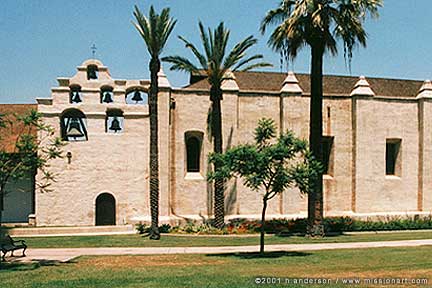
It wouldn't be until the 14th century that Spanish explorer Juan Cabrillo would venture onto the shores of California. In 1771 Father Junipero Serra would come to establish the first Catholic mission in Southern California. After gaining independence from Spain, Mexico would seize control over the California territory. 1850 would see the date when California would become a State naming Los Angeles as municipality. In the years following California and the Los Angeles area would see a surge in immigration by Jewish, African American, Chinese, Japanese, and Mexican settlers. By 1924 the now city of Los Angeles, would reach 1 million residents.
Chapter 2. North America's Environmental Setting
According to the book, The Geography of North America: Environment, Culture, and Economy, "About one-third of the topography of North America is mountainous."
Much of the United States' environmental characteristics such as the Great Lakes in the Midwest, The Grand Canyon of the Colorado River were formed by way of natural occurrences such as down-cutting, a form of erosion, and glaciation.
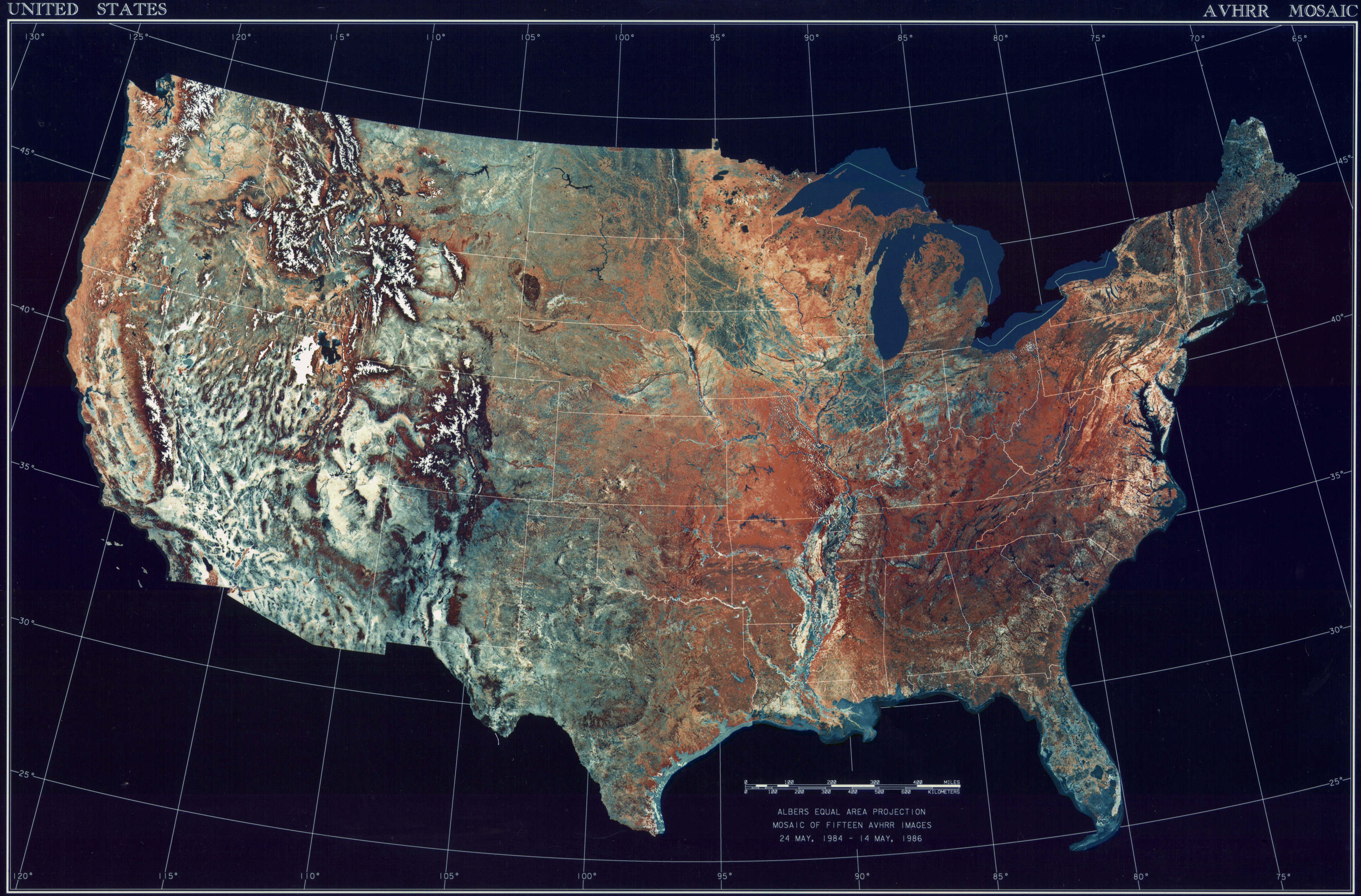
The climate of the Unite States' climate consists of a number Climate zones which are made up of different sub-climates depending on the region in which you are in.
(www.learnnc.org)
OVERVIEW
Southwest Climate: Arid climate with low amounts of precipitation.
Southeast Climate: A warm to hot climate, humid, with a substantial amount of precipitation.
Northeast/Midwest: Mid-Latitudinal Climates
East Coast: Temperate climates with a great amount of humidity
Pacific Northwest: Maritime polar climate, with plenty of precipitation.
Los Angeles sits within the Pacific Southwest region of the United States. Unlike the desert cities in Southern California, Los Angeles is positioned right on the coast which allows for the Mild Mediterranean climate. Throughout the year, Los Angeles basin's weather remains sunny and in the winters and early spring, the region of Los Angeles experiences precipitation.
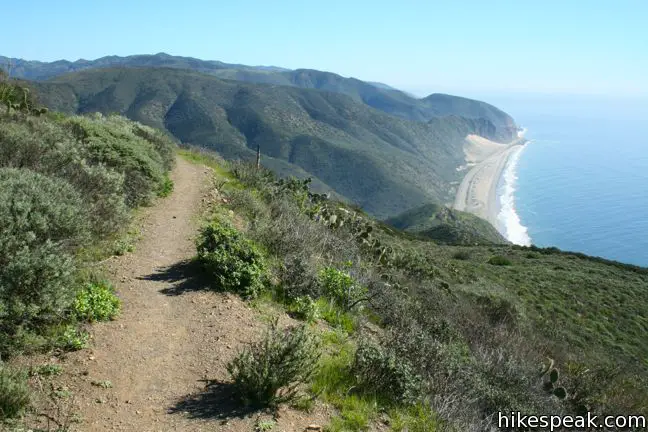
I have grown up looking at many of the various plants, land forms, and other natural charachteristics of Los Angeles as mere features, but these features are what help to furthure characteeize Los Angeles.The city of Los Angeles can also be characterized by distinct land forms such as the Santa Monica Mountains, The San Gabriel Mountains, the San Fernando Valley and the Pacific coast.
Friday, March 8, 2013
Chapter 1. Introduction
THE CITY OF ANGELS
Los Angeles, California also known as The City of Angels is the second largest city in the United States and to me, The Greatest city in the world.
Why cover Los Angeles? Los Angeles has a rich history that dates back many years and is considered to be the beacon for economic prosperity and cultural diversity in the Western United States. According to the 2011 US census, Los Angeles is home to more than 9,000,000 residents and counting. Many people from all over the country and the world call Los Angeles home.
Whether its a Lakers Game in the heart of Downtown Los Angeles,
A Trip down the Miracle Mile to Paramount Pictures to see films being made,
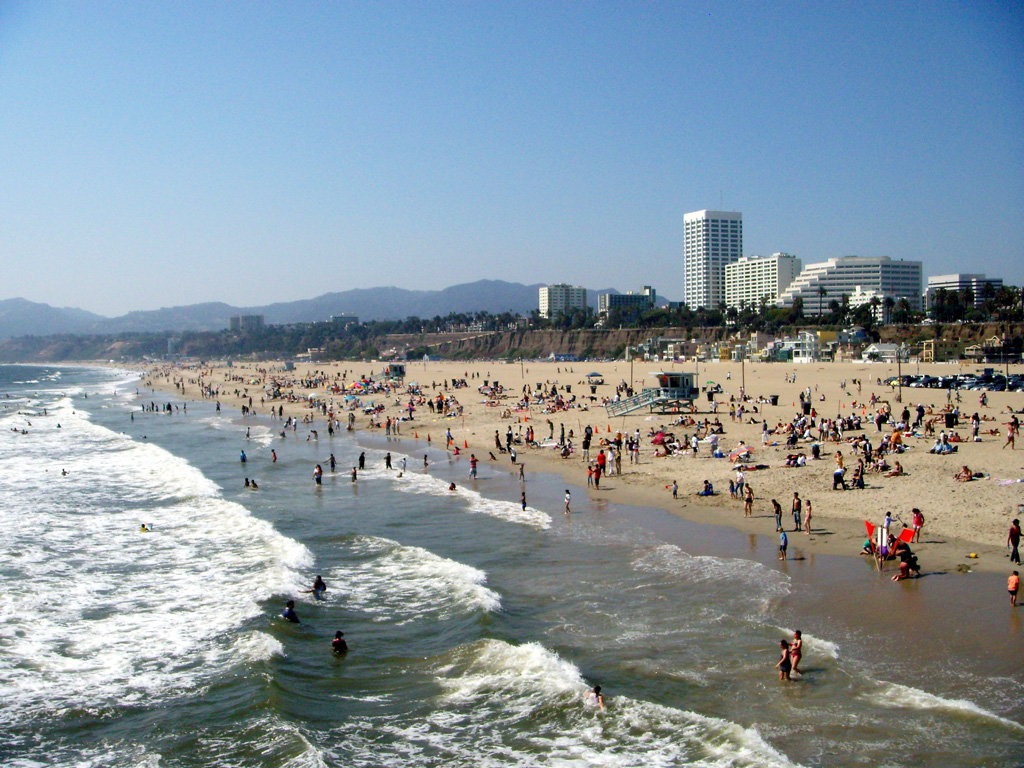
a trip to the beach to surf in the Pacific Ocean,
Or even a celebrity sighting on the streets of Hollywood.
As an indigenous inhabitant of Los Angeles, I have seen every bit that this city has to offer and everyday I have been able to discover something new. From Manhattan Beach to The Inland Empire, Hollywood to Compton, Beverly Hills to Leimert Park, Los Angeles is one of the greatest places to live.
We will be exploring all that makes LA great through the study of Geography!
Subscribe to:
Posts (Atom)