Friday, May 3, 2013

Chapter 13. The Intermontane West

 
                   This chapter discusses the region between the Rocky Mountains and the Si-erra Nevada and Cascade ranges, a large region that remains terra incognita to many North Americans and outsiders alike. This geographical ignorance about this part of the West is surprising since this region covers a huge area and is also one of the most resource-rich regions on the continent (even though it is usually  portrayed in movies simply as a dull series of remote gas stations encountered on a boring coast-to-coast road trip). The Intermontane West not only covers a tremen-dously large area, it is also large in terms of its economic, environmental, and cultural importance. Here lies the deep and famous Grand Canyon.(The Geography of North America: Environment, Culture, Economy.)
 
Much like the Rocky Mountains, the Cascade and Sierra Nevada mountain ranges of the Intermontaine West stretch into both The United States and part of Canada by spanning from the Northern areas of New Mexico and Arizona in the the British Columbia territory. The Intermontane Region also makes up the basin-and-range due to its consistency of peaks and valleys.
 
 
The Intermontane region is also home to some of the most popular tourist destinations in the world. The Grand Canyon is probably one of the most recognizable natural tourist attractions in the United States. With Nearly five million people traveling here each year, The Grand Canyon is a a stellar work of nature and isa gem within the Intermontane West.
 
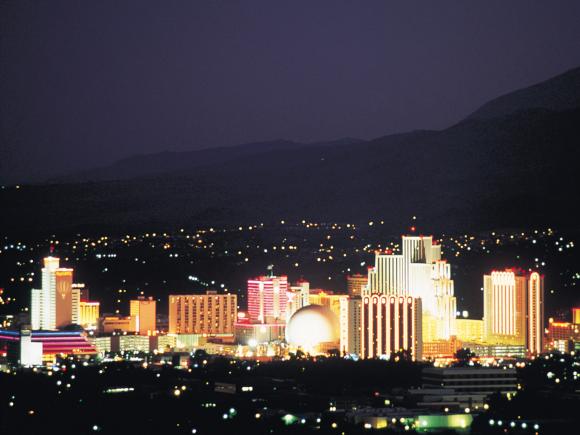
Along with the Grand Canyon, The Intermontane West region is home to some of the most recognizable Resorts and Casinos within the Area. Near the Sierra Nevadas, Reno, Nevada and Las Vegas are both homes to some of the world's most famous casinos and resorts.
 
 
Much like the Intermontane West, Los Angeles to has a bevy of natural and man-made tourist attractions. In recent times, the Los Angeles area has become a hotspot for people who want the Las Vegas and Reno experience without leaving the state of California. Such gaming casinos such as Morongo, Pechanga, Pala, and Viejas are all owned by the tribes indegenous to the state of California and have many visitors per year.


Thursday, May 2, 2013

Chapter 12. The Rocky Mountain Region


The Rocky Mountain Region of the United States boasts some of the most breathtaking scenery and the Rocky Mountains themselves span from the central of New Mexico all the way into the Northeastern tip of British Columbia. The Rocky Mountains are said to contain some of the highest peaks in the United States of America.
 
According to the textbook The Geography of North America: Ennvironment, Culture, Economy, "In the eyes of most people outside the region, the Rock-ies are a region of cold, snowy winters and sunny al-pine meadows lined with wildflowers. Yet these images account for only a sliver of the climatic variation found in the Rocky Mountains. Although the weather in the mountains can turn ferocious and life-threatening in a moment’s notice, it is often mild and inviting. Surpris-ingly, some parts of the region get more days of sun-shine per year than San Diego."
 
 Animals found
within the Rocky Mountain Region include Deer, Elk, Rocky Mountain Goats, Big Horn Sheep, Black Bears, Wolves, Lynx, and Mountain Lions.
 
The Rocky Mountain Region has an econonmy that relies on the mailnly on the Primary sector due to accesibilty to natural resources used ny way of mining and lumber. However in recent years the Region has experienced a boom in the Secondary, Tertiary, and Quaternary sectors.
 
There is an undniable respect for the Rocky Mountain Region in American culture. Many who have been fortunate to experiecne the beauty of the Rocky Mountain region have been said to be captivated by the natural ambience the region has to offer.
 
Singer/Songwriter John Denver moved to the Region, more specifically to Aspen, Colorado during the 1970s and had become so enthralled with the natural beauty of the Region that He even wrote a song called "Rocky Mountain High," for his 1972 album of the same name. Here is Denver performing live (www.youtube.com)
 
Los Angeles Also boasts a landscape of natural beauty that some cannot seem to deny. Similar to the Rocky Mountian Region, the Moutains of Los Angeles county are products of tectonic plate shifts which caused mountainus ranges to form.
 
Though the Los Angeles Mountains like the ones pictured above, are not as densely populated with wildlife, the Los Angeles Mountains are home to animals such as Bears, Mountain Lions, Coyotes, and a plethora of wild Birds of Prey including the Red-Tailed Hawk.


Chapter 11. The Great Plains


The Great Plains of the United States are located between the Rocky Mountain, Corn Belt and near the Grea lakes region. The Great Plains region consists of the states Nebraska, Montana, Texas, Oklahoma, South Dakota, Wyoming, part of Colorado, New Mexico, and North Dakota, Minnesota, Kansas, and Iowa.
 
According to the Book, The Geograpphy of North America: Environment, Culture, Economy, "The climate of the Great Plains is characterized by  unpredictability, variability, and extremes from day to day, month to month, and year to year. Searing sum-mer heat contrasts with bone-chilling cold. Months of drought give way to flooding rains and violent storms. At any given time, sharp differences in temperature and moisture may be observed even between nearby places.

Fun Fact: Due to the immense lack of forestation, many early settlers referred to The Great Plains as "The Great American Desert.
 (coutesy of www.wunderground.com)

The History of the settlement of the Great Plains began with the Native American tribes such as the Cheyenne, Comanche, Plains Apache, and Blackfoot before European settlers would eventually invade the native land during the 1870s.

Today, The Great Plains region has become a mecca for alternative energy projects, vast oil fields and a has continued to be a hot spot for agricultural prosperity and the the meat packing industry.

(www.ridley-thomas.lacounty.gov)

Much like the Great Plains, Los Angeles too, is a region where oil fields, agricultural promise, and alternative energy projects can be found. Pictured here, This oil drill is located within the Baldwin Hills-LaDera Heights area of Los Angeles, up the hill from the Leimert Park Area mentioned in one of the previous chapters. Although Los Angeles is not widely recognized as an oil capitol in the United States, The city boasts some of the most unique locations for Oil fields, Oil drills, and Oil Wells such as this one located in Beverly Hills (pictured below: courtesy of www.fastcompany.com)


Sunday, March 10, 2013

Chapter 10. The Coastal South


The Coastal South of the United States, much like the California coast is a hot spot destination for people across America looking for fun in the sun. According to studies, The Geography of North America states the following, "...Tourism is another major contributor to the Coastal South’s economy. The region contains numerous resort communities, many of which draw millions of tourists into the area every year. The largest of its tourist attractions is Walt Disney World near Orlando, Florida. In barely three decades, the area around Walt Disney World has grown from a sleepy, backwoods community in hot, humid central Florida to the world’s largest tourist destination.

(Disnyeworld.go.com)

In the spring of 2007, I personally had the opportunity to visit the Coastal South and venture into Miami, Florida for a series of performances. I was awestruck at the similarities I found between the coast of Miami and the coast of Los Angeles. I remember thinking to myself that Miami was a bigger and wider version of Santa Monica and Venice put together.
I found that much of the topography between the two areas were similar, the only real differences between the two were location and climate.

Chapter 9. The Inland South

In the previous chapter, I stated that the Great Lakes and Corn Belt Region of the United States were the Heart of America. Well the Inland South is the epitome of the American soul. Here can be found some of the most passionate and "patriotic" people in the country.

(usanews.com)
The Inland South has a rich history of culture. Much of the history of the south can be linked to the Civil War of the 1800s in which Southern States(The Confederacy) went to war with the Northern States(The Union) over the desire to abolish slavery by the north and the Federal government's interference with State's Rights.

Since that time the Inland South has witnessed much more racial and social change. Most notably, the Civil Rights movement. Many public figures are natives of the Inland South including former President Bill Clinton, Dr. Martin Luther King, Jr., Pittsburgh Steelers Quarterback Terry Bradshaw, and Rock Band Lynyrd Skynyrd.

The Inland south has had a great impact on the city of Los Angeles as many migrants from the Southern States brought with them traditions and southern cuisine.

Chapter 8. The Great Lakes and Corn Belt


The Great Lakes and Corn Belt are what most of us Americans consider to be the Heart of America.

The Great Lakes Region is comprised of states Minnesota, Wisconsin, Illinois, Indiana, Ohio, Pennsylvania, and upstate New York.
The Corn Belt is comprised of Indiana, Illinois, Iowa, Missouri, eastern Nebraska, and eastern Kansas.

The  area is rooted in Grounded in traditional "American Values. According to The Geography of North America, "Historically, the highly profitable and productive agriculture of the Great Lakes and Corn Belt has been complemented by an equally profitable industrial sector. Much of the food produced on the farms of the Corn Belt has traditionally been consumed by industrial workers in the cities of the Great Lakes.


Much of the economy within the Corn Belt and Great Lakes area of the country is solely related to the Primary and Secondary sectors of the economy. This is due in part to the natural resources available to the region including iron deposits used for steel manufacturing, much flat and fertile land used for the farming of cattle, wheat, corn, and other grains. "Soils are deep, fertile, and rich in organic material and nitrogen, and the land is relatively level. The warm nights, hot days, and well-distributed rainfall of the region during the growing season are ideal conditions for raising corn. Most farms in the area are family operated and average more than 300 acres..."(Encyclopedia Britannica).

The economy of the Corn Belt and Great Lakes are dependent on manufacturing industries housed in the region. So when the industries suffer economic loss, so does the region.

(farmflavor.com)


Unlike the Corn Belt and Great Lakes Region, the city of Los Angeles has an economy that contains jobs mostly within the Secondary, Tertiary, and Quaternary sectors. Since Los Angeles has jobs and industries in all of those sectors, the economy of the city is less dependent on one industry for economic support. The biggest industry of Los Angeles is the film industry. This has been the case since the mid-1930s and it is an industry that keeps on growing.

Chapter 7. Megalopoplis


The Merriam-Webster dictionary defines MEGALOPOLIS as a thickly populated region centering in a metropolis or embracing several metropolises.

This area of the United States was a prime location for the Colonists during the 15th and 16th centuries due its access to the Ocean, fertile land, and access to natural resources. What is noteworthy about all the cities that make up what we call Megalopolis is that each of these cities is established near a an important river in the region. 

One may ask, Why is establishing a city near a river so important? Well, many of the colonies established near such rivers as the Hudson, Connecticut  and Potomac, would allow for easy access to natural resources. This allowed cities such as New York, Boston, Philadelphia and Baltimore to establish themselves as port cities. The Geography of North America textbook states that, " The British and other  European colonial powers established colonies in order to extract resources for transformation into finished product. These resources, along with products made from processing them, were shipped to Europe through these port cities. These port cities were developed along the major rivers of the region." 

LOS ANGELES as a MEGALOPOLIS


The city of LA is apart of the Southern California megalopolis system. However given its size and other characteristics such as diversity, proximity to a large body of water, and its proximity to natural resources, the city very well could be considered to be a megalopolis on its own. 

Just as the Northeast megalopolis cities are port cities, Los Angeles is home to some of the busiest ports in the world. Not only that, but Los Angeles has been called home by many various ethnic groups.
(portstrategy.com)
I have been fortunate enough to grow up in one of the most culturally rich parts of Los Angeles. Leimert Park is a community which is steeped in African American tradition and History. During the 1930s and 1940s, the Leimert area of Los Angeles was predominantly inhabited by Jewish and Japanese immigrants. 
(leimertparkbeat.com)                 During the 1950s, there was a great surge of African American settlers who migrated from the Southern states into the Northeast cities like New York, Lake cities like Chicago and Pacific cities like Los Angeles. Many of the migrants descended on cities like Los Angeles in search of better opportunities for education and work. Others sought refuge from the harsh racism and bigotry that plagued the Inland South states. 
Today areas like Leimert Park make up the rich culture of L.A.'s megalopolis. I am glad to have grown up in a community rich with the history of my ancestors.